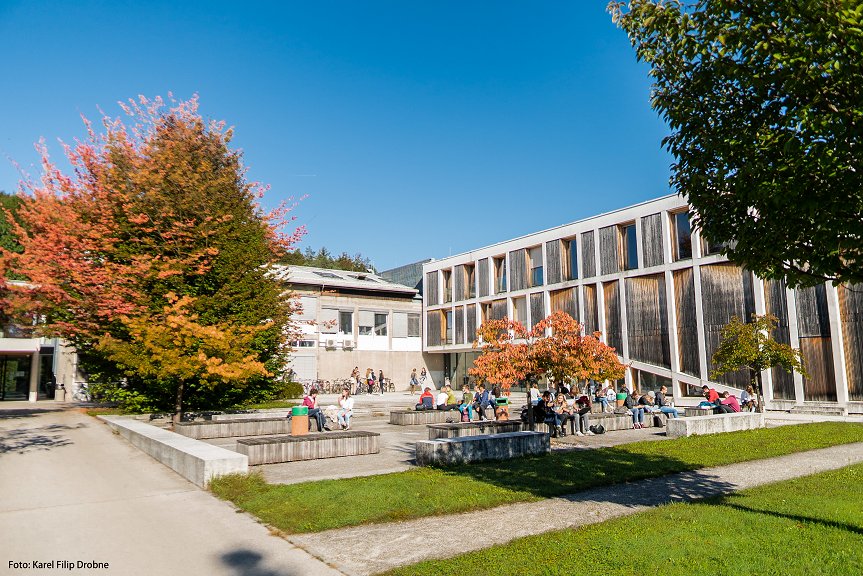
The distinguished professors and researchers at the Biotechnical Faculty perform extensive fundamental, applied, and developmental research work. Research work is organised in 49 research teams. The Faculty is involved in approximately 191 research projects, of which 89 are national and 102 international projects.
The Biotechnical Faculty has about 100 young researchers financed by the Slovenian Research Agency and about 25 young researchers from business, financed by the Slovenian Technology Agency.
Since 2009, the Biotechnical Faculty has participated as a partner in three Centres of Excellence financed by the EU Structural Fund and the Ministry of Higher Education, Science and Technology and which will last until 2013.
Biotechnical Faculty is a partner in one Development center which will last untill the end of 2014 and in one Competence center which will last untill the end of 2013.
Research work at the Biotechnical Faculty is organized and implemented in such a way as to enable students to achieve the following goals:
in the field of agronomy:
- to become familiar with the structure and function of agroecosystems in the pedoclimatic conditions of Slovenia, closely linked with traditional soil utilization and socio-economic relations
- to study the soil from the point of its composition, properties, fertility, water regime, and pollution, in order successfully to facilitate agricultural production and sustainable management of agricultural land
- to advance knowledge in the field of botany, zoology, microbiology, genetics, plant breeding, phytomedicine, agrometeorology, and agrotechnology and apply it in sustainable agricultural production
- to develop and improve agricultural technologies applied in the sustainable production of healthy food
- to preserve the population of rural areas and activities such as crop production, grassland and pasture management, fruit production, viticulture, and vegetable production
- to study the agricultural economy, policy, and social processes
in the field of animal science
- to research genetic factors in animal production and to develop selection methods, advanced animal production technologies, sustainable agriculture and high quality animal products
- to study the properties of Slovene autochthonous animal species
- to study the physiological principles of nutrition in the chain system: feed – nutritious substances – animal – functional food – environment, and to include probiotic and phytobiotic substances in the system
- to develop and apply molecular tools in order to study biotic diversity, properties of ribosomal genes and operons, and the function of microbial ecosystems in the intestinal tract and in the environment
- to investigate the chemistry, enzymatic activities and microbiology of milk and dairy products
- to study the economics and legislation of Slovene agro-food production in European integration processes.
in the field of biology
- to study the anatomy and physiology of plants and animals and understand the fundamentals of life
- to study animal and plant species from taxonomic and phylogenetic points of view and thus contribute to understanding the biodiversity in Slovenia and the wider area
- to identify particular ecological issues, environmental laws and to solve emerging ecological problems, taking into account the protection of the environmental and natural heritage
- to learn about the fundamentals of active membrane components and toxins of marine organisms and identify their functions
- to study the principles of bacterial resistance
- to determine the role of fungi and their symbiotic relationship with higher plants
- to study the basic physiology of sensory perception in insects and fish and their behavioural responses
- to study the physical development and anthropometric characteristics of Slovene youth
- to transfer advanced biological findings into the curriculum of primary and secondary schools and develop didactics in biology
in the field of biotechnology
- to learn about the basic properties and characteristics of living organisms and to assess their potential application in biotechnology
- to be able to use the most up-to-date research tools of genomics, transcriptomics, proteomics and metagenomics
- to study the genetics and physiology of living organisms and understand the basic principals of life
- to become familiar with the basic principles of plant and cell tissue cultures
- to become familiar with the basic principles of different biotechnologies (plant, microbial, animal, environmental, industrial, pharmaceutical and medical)
- to acquire knowledge on intellectual property rights
- to become aware of ethical issues in life sciences
in the field of food science and technology
- to advance research methods for efficient identification of pathogenic bacteria
- to create national food labels for functional food products
- to study microbial clusters of nitrifiers and their activities
- to become familiar with post-harvest processes and influence of volatile metabolites and antioxidants on the stability of fruit and vegetables
- to research the bioaccumulation of metal ions in yeasts in order to develop natural bioactive sources of minerals
- to research genetic, nutritional and technological impacts on meat quality
- to investigate the role of phenolic compounds as antioxidants for preventing oxidative stress on wine
in the field of forestry
- to study the structure, properties and function of forest ecosystems and to become familiar with the diversity and stability of forests
- efficiently to relate and connect natural, environmental, technological and economic factors in the protection, development and improvement of forests
- to research hazards and disturbances in the forest due to the emerging needs of man and society, the impact on forest soils, water resources and forest production, as well as the response of forests to such stress
- to advance forest management technologies in order to preserve forests and their functions
- to gain an in-depth insight into the role of forests in rural development
in the field of landscape architecture
- to attain knowledge of the Slovene landscape heritage and its cultural and natural origins
- to research the typological characteristics of the Slovene regions; including the advancement of methodological approaches to solutions
- to become aware of the rapid changes in the world, especially in relation to issues of national identity and globalisation
- to gain an in-depth insight into the landscape architecture profession
- to study the transformation of two-dimensional abstract patterns into three-dimensional landscape features
- critically to evaluate modern trends in landscape design
- to follow basic principles – attitude to nature and the natural, social viewpoints of landscaping and environmental psychology of landscape planning and management
- to develop methodological solutions in the area of evaluation and analysis of the landscape and landscape planning
in the field of wood science and technology
- to research the properties and quality of wood, including the study of biological, chemical, physiological and mechanical characteristics relevant for the processing, machining, wood surface finishing and final utilization of wood
- to learn about the hardness of wood; i.e., resistance to indentation, to study the surface properties, dimensional stability, internal strength and wood density of wood-based materials, to investigate the ecological properties of glue and to perform wood quality evaluation
- to increase raw material potential by utilizing less marketable tree species,and extracting chemicals from wood and bark for further processing
- to study wood pests, the biology of wood deterioration, and to develop and apply environmentally friendly chemical substances and wood protection processes
- to study the drying processes of sawn wood, veneers, splinters and fibres
- to become familiar with mechanical woodworking, woodworking machinery and learn about the impact of interactions between machine – tool – material (wood)
- to introduce environmentally friendly surface coatings and new methods of their application
- to improve the production and design of wooden products (innovations in furniture construction, including dimensional rationalisation)
- to provide in-depth study of wood processing and production technology systems, by applying modern qualitative methods for business decisions and data analysis
- to understand organization, economics, management and marketing issues, as well as the production and utilization of wood in relation to environmental protection
See also Research and Development Projects at the University of Ljubljana
Web site administrator:
dr. Marjeta Stevanović, Head of Research and Development Office and International Office at Biotechnical Faculty; ECQA Certified EU Project Manager.