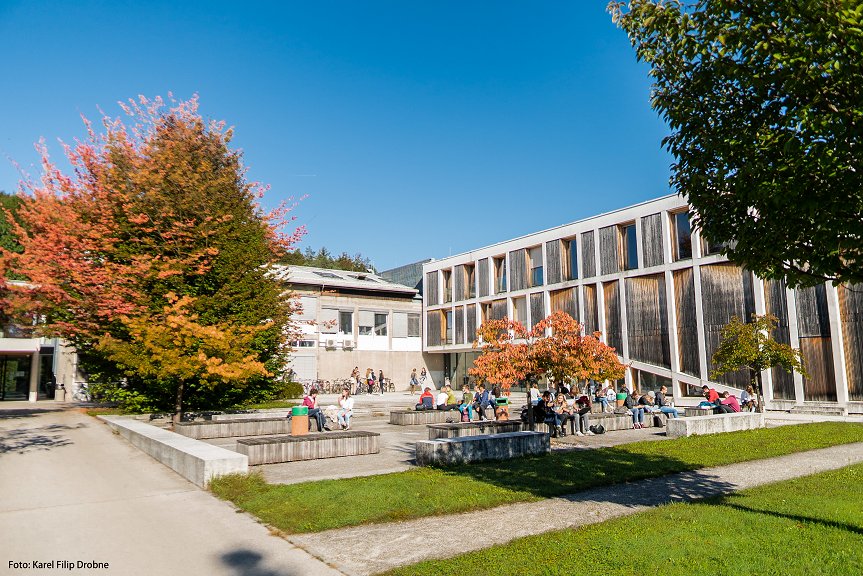
Students Create
Knowledge for the Future
Events and Highlights
25.05.2026
International research lead by researchers from the University of Ljubljana and INRAE institute has revealed that grey wolves are the main factor limiting the expansion of golden jackals in Europe. However, human activity is importantly reducing the suppressive effect of top predators. The study...
05.05.2026
The Biotechnical Faculty is organizing a summer school Metabolic Response of Horticultural Plants to Stress Factors (14–20 June 2026), aimed at doctoral students and early-stage researchers. The 3 ECTS program offers hands-on training in advanced analytical methods and a comprehensive insight into...
11.03.2026
Belgian bioengineering student Josephine de Brouwer began her study exchange at the Biotechnical Faculty of the University of Ljubljana in a truly special way — she travelled from Brussels to Ljubljana by bicycle. On a journey of nearly 1,500 kilometres, completed partly by bike and partly by train,...
08.03.2026
Predstavljajte si material, ki je debel le en atom. Tako tanek, da ga skoraj ni. A hkrati dovolj zmogljiv, da lahko pomaga razvijati nove medicinske diagnostike, napredne senzorje ali trajnostne tehnologije prihodnosti. Takšni so 2D materiali, med njimi tudi grafen – eden najbolj raziskovanih...
05.03.2026
The Biotechnical Faculty of the University of Ljubljana is announcing three Researcher positions within the ERA Chair Foodomics project, led by Prof. Dr. Urška Vrhovšek. The positions are open to candidates with a completed master’s degree and excellent English skills who wish to work in an...
03.03.2026
To mark the anniversary, ViroiDoc invites its doctoral candidates to share their mobility experiences in a blog series on the project website in 2026.
14.05.2026 - 01.09.2026
Dear All, The Municipality of Škocjan and the Biotechnical Faculty at the University of Ljubljana invite you to the opening of an exhibition of conceptual proposals for landscape architecture designs of Škocjan’s central public space, prepared by third-year. The exhibition opening...
11.06.2026 - 11.06.2026
Invitation to the Presentation of the Terminological Dictionary of Animal Husbandry and Zootechnics After several years of work, the Terminological Dictionary of Animal Husbandry and Zootechnics has finally been published. It is the first systematic terminology dictionary in this field; experts have...
12.06.2026 - 12.06.2026
The assessment of researchers increasingly moves away from individual metrics to a qualitative assessment supported by the sustainable use of quantitative indicators. Once started with the San Francisco Declaration on Research Assessment (SF DORA), the European community is spearheading the transformation...
16.06.2026 - 16.06.2026
Public Lecture and Discussion with Dermot a short space of time - practice-based research at DFLA When: June 16, 2026, at 5:00 p.m. Where: UL BF, Lecture Hall A4, Jamnikarjeva 101, 1000 Ljubljana Irish landscape architect Dermot Foley will present his experience of doctoral...
29.06.2026 - 03.07.2026
28.09.2026 - 01.10.2026
Aquaculture Europe 2026 In the fall of 2026 (28. 9 - 10. 1. 2026), Ljubljana will host one of Europe’s largest aquaculture events—Aquaculture Europe 2026 (AE2026). The international conference will take place at the Ljubljana Exhibition and Convention Center and will bring together...