Akronim:
J1-70028
Oddelek:
Oddelek za mikrobiologijo
Tip projekta:
ARIS
Vrsta projekta:
Temeljni
Vloga na projektu:
Vodilni
Trajanje:
01.03.2026 - 28.02.2029
Vrednost projekta skupaj:
1,6 FTE
Vodja projekta na BF:
Grosboillot Virginie Marie-AlineNačrta za ravnanje z raziskovalnimi podatki (NRRP)
PovezavaParticipating ROs
- Faculty of Computer Science and Informatics
- Faculty of Pharmacy
External participating ROs
- Zunanja povezava na Institute Odpira se v novem oknu of Molecular Biology, University of Queensland, Brisbane
Project description
Bacteriophages or phages are the most abundant biological entities on Earth, with an estimated global population of 10³¹, significantly exceeding the number of bacteria. Phages can have two basic life cycles: a lytic cycle, which leads to immediate phage replication and lysis of the host, and a lysogenic cycle, in which the phage genomes integrate into the bacterial host chromosome as prophages. Surprisingly, approximately 70% of bacterial genomes contain prophages, which in some cases can represent 10 to 20% of the bacterial genome. Their presence has a profound impact on the phenotype of their bacterial hosts, influencing traits such as bacterial viability, cell wall structure, and antibiotic susceptibility. The latter aspect is particularly important in the context of the growing global antimicrobial resistance crisis, where understanding the relationship between prophages and antibiotic efficacy is crucial for the development of innovative therapeutic strategies. Despite the known ability of prophages to modify bacterial cell walls, for example to prevent superinfection with other phages, research on how such modifications can increase antibiotic susceptibility is limited. Furthermore, the underlying molecular mechanisms are largely unexplored. Preliminary data obtained by our team indicate that specific prophages belonging to the genus SPbetavirus can reduce the minimum inhibitory concentration for cell wall-acting antibiotics in the bacterium Bacillus subtilis . Interestingly, changes in antibiotic susceptibility can be associated with observable morphological changes in the host bacterial cells without affecting their viability. We hypothesize that prophages induce changes in the cell wall, leading to increased susceptibility of the bacterial host to cell wall-acting antibiotics. Furthermore, the fact that these changes do not affect the viability of the host bacteria suggests that this mechanism could also be conserved in other phage-host relationships. The aim of the research project is to investigate cell wall alterations in B. subtilis induced by SPbetavirus prophages, with a particular focus on their role in increasing host susceptibility to cell wall-acting antibiotics such as ampicillin. The research aims to understand the altered structure and composition of the bacterial cell wall, identify the prophage genes/proteins responsible for these alterations, and determine whether these mechanisms are specific to B. subtilis or can also be found in other bacteria-prophage systems.
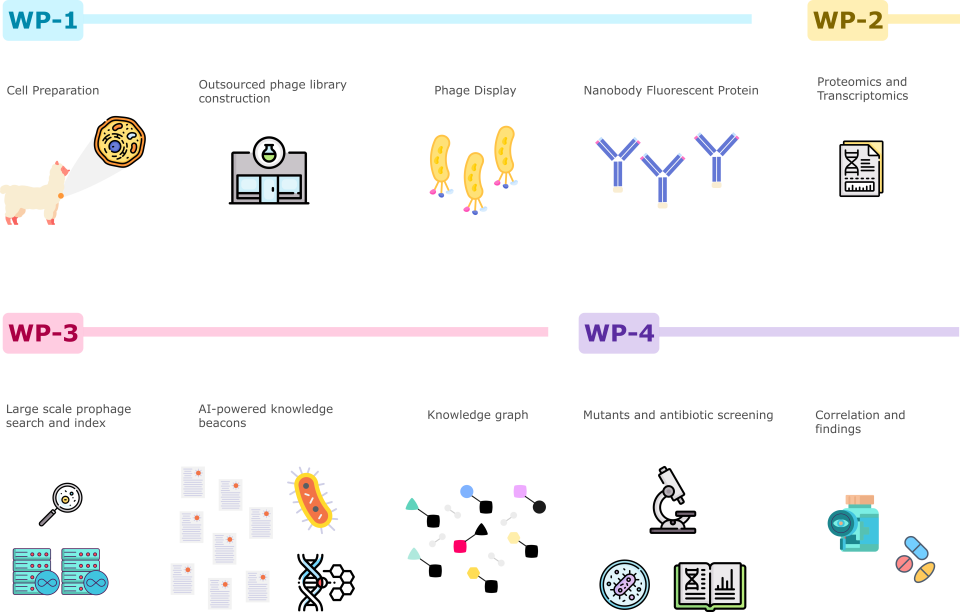
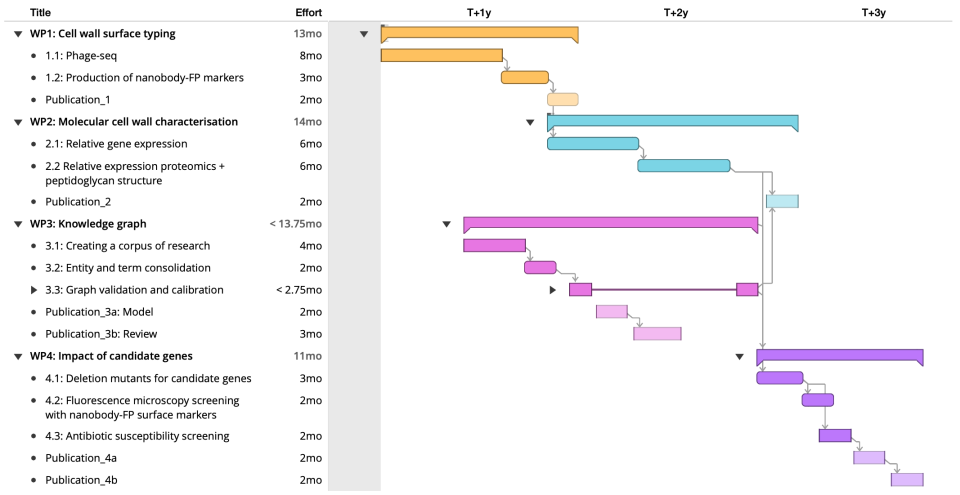
The project is divided into four work packages:
1) Identification of surface structural changes and changes in cell wall composition caused by prophage integration;
2) Investigating the molecular mechanisms underlying changes in cell wall composition;
3) Creating a knowledge map of changes in bacterial morphology and cell wall composition caused by prophages, which are associated with changes in antibiotic susceptibility, and
4) Assessment of the impact of candidate genes on the efficacy of antibiotics acting on the cell wall and on host morphology.
The aim of this project is to improve our understanding of prophage-host interactions, with a focus on understanding the phage effect on the cell wall, and consequently on the increased susceptibility to antibiotics that act on the cell wall. By filling the gap in understanding how prophages can increase bacterial susceptibility to antibiotics, this research may contribute to new therapeutic strategies aimed at combating bacterial resistance to antibiotics and optimizing the treatment of infections with resistant bacterial species.
Zunanja povezava na Project team composition Odpira se v novem oknu
- Zunanja povezava na Virginie Grosboillot Odpira se v novem oknu
- Zunanja povezava na Valentina Floccari Odpira se v novem oknu
- Zunanja povezava na Anna Dragos Odpira se v novem oknu
- Zunanja povezava na Nina Vesel Odpira se v novem oknu
- Zunanja povezava na Hannah Bonham Odpira se v novem oknu
- Zunanja povezava na Anja Klancnik Odpira se v novem oknu
- Zunanja povezava na Blaz South Odpira se v novem oknu
- Zunanja povezava na Tomaz Bratkovic Odpira se v novem oknu
- Zunanja povezava na Mojca Lunder Odpira se v novem oknu
- Zunanja povezava na Ana Mitrovic Odpira se v novem oknu
- Zunanja povezava na Tomaz Curk Odpira se v novem oknu
- Zunanja povezava na Martin Špendl Odpira se v novem oknu
Phases of the project and their realization
- WP1: Description of structural and compositional changes on the cell surface induced by prophage integration.
Milestone 1: Affinity profile developed for each lysogen + fluorescent markers (Nanobody-FP) developed and tested.
- WP2: Investigation of the molecular mechanisms underlying prophage-induced changes in cell wall composition.
Milestone 2: List of genes and proteins potentially influencing the compositional and structural changes that occur at the cell surface following prophage integration.
- WP3: Creation of a knowledge graph on changes in cell wall morphology and composition caused by prophages in relation to changes in antibiotic susceptibility.
Milestone 3: Completion of the knowledge graph that will be available for use.
- WP4: Assessment of the impact of candidate genes on the efficacy of cell wall-acting antibiotics and on host morphology.
Milestone 4: Testing mutants of candidate genes associated with antibiotic susceptibility.